Imagine Louisiana

Imagine Louisiana

A Baseball Town on the Brink: Louisiana Lightning

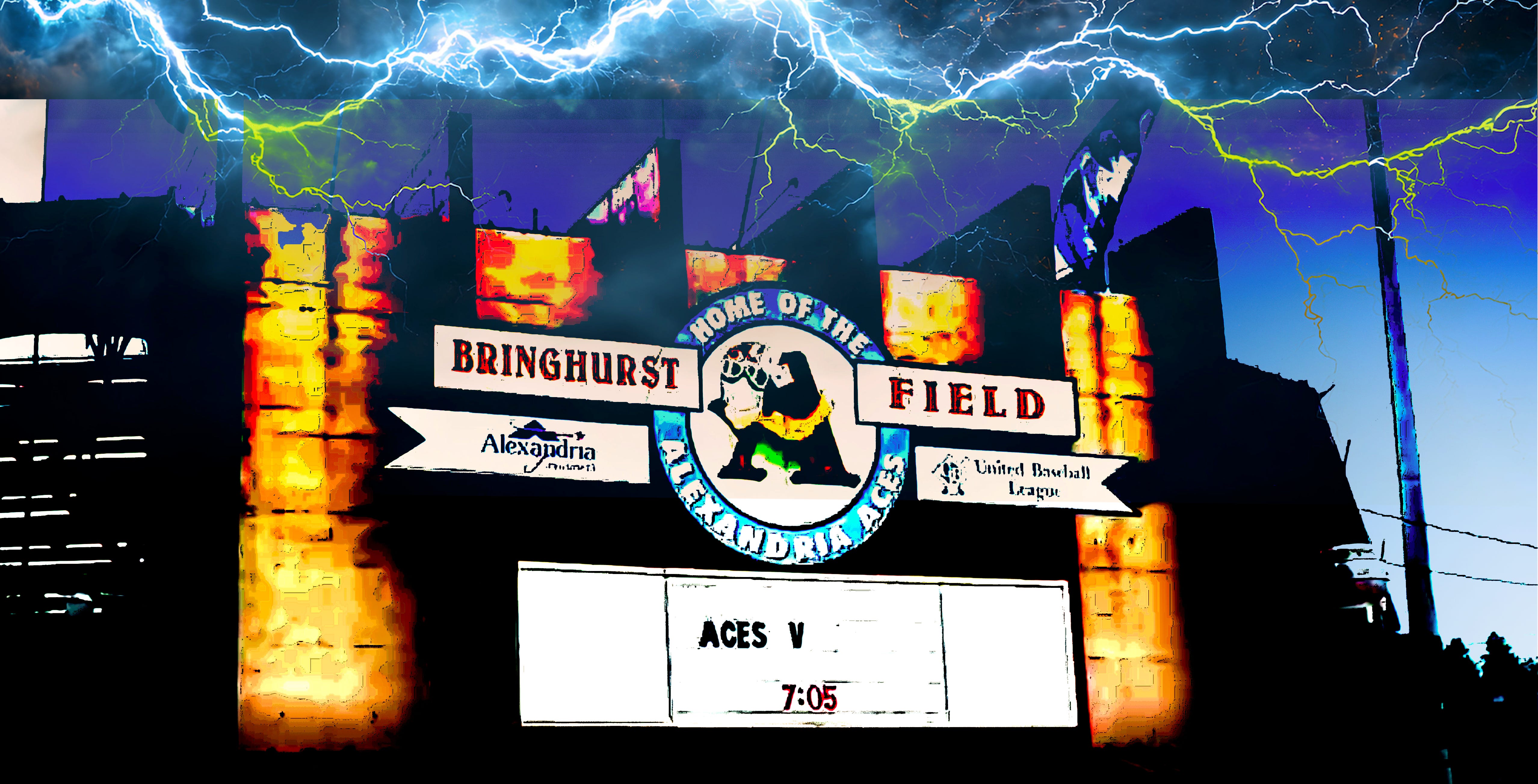
Alexandria’s Bringhurst Field, the oldest surviving ballpark in Louisiana & the cathedral of the raucous Evangeline League, was the scene of one of the most shocking tragedies in baseball history.

Lamar White, Jr.'s avatar
Lamar White, Jr.
May 15, 2026
∙ Paid
© Lamar White, Jr., 2026.
This is the first installment in a multi-part series on Bringhurst Field and the long, improbable history of professional baseball in Alexandria, Louisiana.
Alexandria is now launching an ambitious $82 million plan to revitalize Masonic Drive, including at least $9.5 million to restore and transform the 92-year-old ballpark into a modern, 21st-century facility. As that work begins, it is worth asking how Bringhurst became a cherished and legendary field of dreams in the first place. This is a story of civic ambition and summer rituals, hard-luck leagues and borrowed dreams, and the generations of players, managers, promoters, and fans who turned a modest ballpark into one of Louisiana’s enduring landmarks.
We begin not with a pennant, a famous name, or a triumphant Opening Day, but with Andy Strong, a young center fielder whose final night on the field offers a stark and haunting entry point into the larger history of baseball in Alexandria — a place where the romance of the game was always shadowed by weather, money, race, politics, memory, and the fragile machinery of small-town professional sports.

“It just seemed all night that somethin’ was going to happen. Both teams were trying for that one run. Everybody was swingin’ on the first pitch, and it looked like we were all hurrying.”

— Johnny George, manager and catcher of the Crowley Millers

“That’s two outs away,” hollered Andy Strong, the 25-year-old1 rookie center fielder for the Crowley Millers, over to left fielder Walt Lamey in the bottom of the sixth inning at Alexandria’s Bringhurst Field on Saturday night, June 16, 1951. Under the bright lights of the ballpark, he added, “Only need one more now.”2

Andy had been a star athlete at Centenary College in Shreveport, where he and his older brother, Cleve, were routinely described in the local press as a pair of basketball phenoms. He had joined the Crowley Millers only 19 days earlier. His decision to pursue professional baseball — at least to try — seemed impulsive, even misguided. But at 25, he understood that if he did not seize this opportunity, he might never get another. Andrew Dary Strong did not want to spend the rest of his life wondering whether he had wasted his God-given talents.34

Two years earlier, he had stepped away from the limelight of college sports after answering a call to become a Baptist minister. He left Centenary, transferred to East Texas Baptist University in Marshall, and completed his senior year there. It was also where he met his wife, Merle. Through her family, the Oldhams, he secured a position as an assistant coach for the high school baseball team in their hometown of Pittsburg, Texas, about an hour northwest of Marshall.

Recognizing the improbable odds of climbing to the majors from the relative obscurity of the Evangeline League, Andy assured his colleagues and students at Pittsburg High School that he would be back in time for baseball season the following year. No, this was just a side gig, he said, a way to earn a little extra money, so long as he could play decent enough ball, which was no guarantee. He did not want to leave the impression that his decision was irrational, even though it required a certain amount of magical — or delusional — thinking to believe he could reach the big leagues.

Andy Strong

Fortunately for him, baseball fans in Crowley knew nothing of the hype he’d generated as a college athlete in Shreveport. In truth, they had no idea what to expect from anyone on the roster in 1951, the team’s first season in the Evangeline League. A couple of years earlier, thanks to the addition of a club in Baton Rouge, the league had been promoted from Class D—the lowest rung of the minor leagues—to Class C, a vertical move that meant far more to players than to fans. For players, it meant their average pay doubled from $5 a game ($64 in today’s dollars) to $10 a game ($127 in today’s dollars).5

“Andy was virtually unknown when he signed with the Millers in late May,” baseball historian Gaylon White notes. “The Crowley Daily Signal referred to him only as ‘Strong’ because the team’s president didn’t know his full name or the club he last played with. When his full name first appeared in print, it was wrong — ‘Eddie Strong.’”6

By early June, as the Millers caught fire with a win streak that catapulted them into first place, Andy Strong had become an overnight celebrity in Crowley. The outfielder was single-handedly responsible for their seventh consecutive win. When the Millers headed into Alexandria, hoping to extend their streak to 11, he was batting a solid .339 and performing flawlessly in the outfield. His spot in the starting lineup was secure.7

Andy, however, was not supposed to play at Bringhurst that night. Johnny George, the team’s manager and starting catcher, had agreed to give the rookie a couple of days off. George rented the other side of a duplex from Andy in Crowley, and he was impressed by the young man’s dedication to the team and by how quickly his teammates had embraced him. “Two days after he joined the club, it was like he’d been with us all along. He fit right in,” George said. “He played to win all the time. You know, ball players get to be brothers. We eat together, sleep together, and we live together a lot until we get to think together. Everything Andy did, it looked like he was trying to please me, like he was asking if he’d done right or not.”

George also knew, perhaps better than anyone else, that despite Andy’s happy-go-lucky disposition, he missed his wife, Merle, and their infant son, Danny. They had left Pittsburg and were staying with his parents in Doyline, Louisiana, a small town in Webster Parish about twenty miles east of Shreveport.

Andy decided to follow the team up to Alexandria in his car that Saturday afternoon, allowing him to break up the long drive to Doyline. The next day was Father’s Day, and he planned to bring Merle and Danny back to Crowley to live with him for the rest of the season.8

Another newly signed rookie outfielder, a kid from Lake Charles named Jack Dolan, had been dispatched to join the team in Alexandria. It was an easy trip from Lake Charles, an hour-and-a-half drive north, but Dolan, who had transferred from McNeese State to Tulane during his final year of college, was in New Orleans. That meant taking the Greyhound to Krotz Springs and then catching a Trailways bus to Alexandria for the final leg. The trip would take all day, but he should still have made it to Bringhurst Field in time for the game.

Shortly after the Millers arrived at Alexandria’s Hotel Bentley, Johnny George received a phone call from Dolan. The trip to Krotz Springs had taken nearly an hour longer than expected. He had missed his connection to Alexandria, which meant he would miss the game.

The team was lounging in the Bentley’s opulent lobby when Johnny George reappeared and told Andy he needed to speak with him privately. Plans had changed, George explained. He’d have to drive up to Doyline the next morning. He was stuck in Alexandria.

Players would later note an obvious shift in Andy’s demeanor. Instead of rejoining the team in the lobby, Andy walked out onto the hotel’s veranda and planted himself in a chair in the corner. Ed Keim of Crowley’s KSIG radio spotted the rookie outfielder sitting alone and decided to greet him. “He wasn’t his usual bubbly self,” Keim recalled decades later. “He had something on his mind, or it appeared that way.”9

Imagine Louisiana is a reader-supported publication. To receive new posts and support my work, consider becoming a free or paid subscriber.

User's avatar

Continue reading this post for free, courtesy of Lamar White, Jr..

Or purchase a paid subscription.
© 2026 Lamar White, Jr. · Privacy ∙ Terms ∙ Collection notice
Start your SubstackGet the app
Substack is the home for great culture