

A Baseball Town on the Brink: Red River, Red Ink, Red Lines
Before the Aces arrived, Alexandria had already built a baseball world of Black ballparks, white professional clubs, summer crowds, unpaid bills, and one lost team the city could not quite forgive

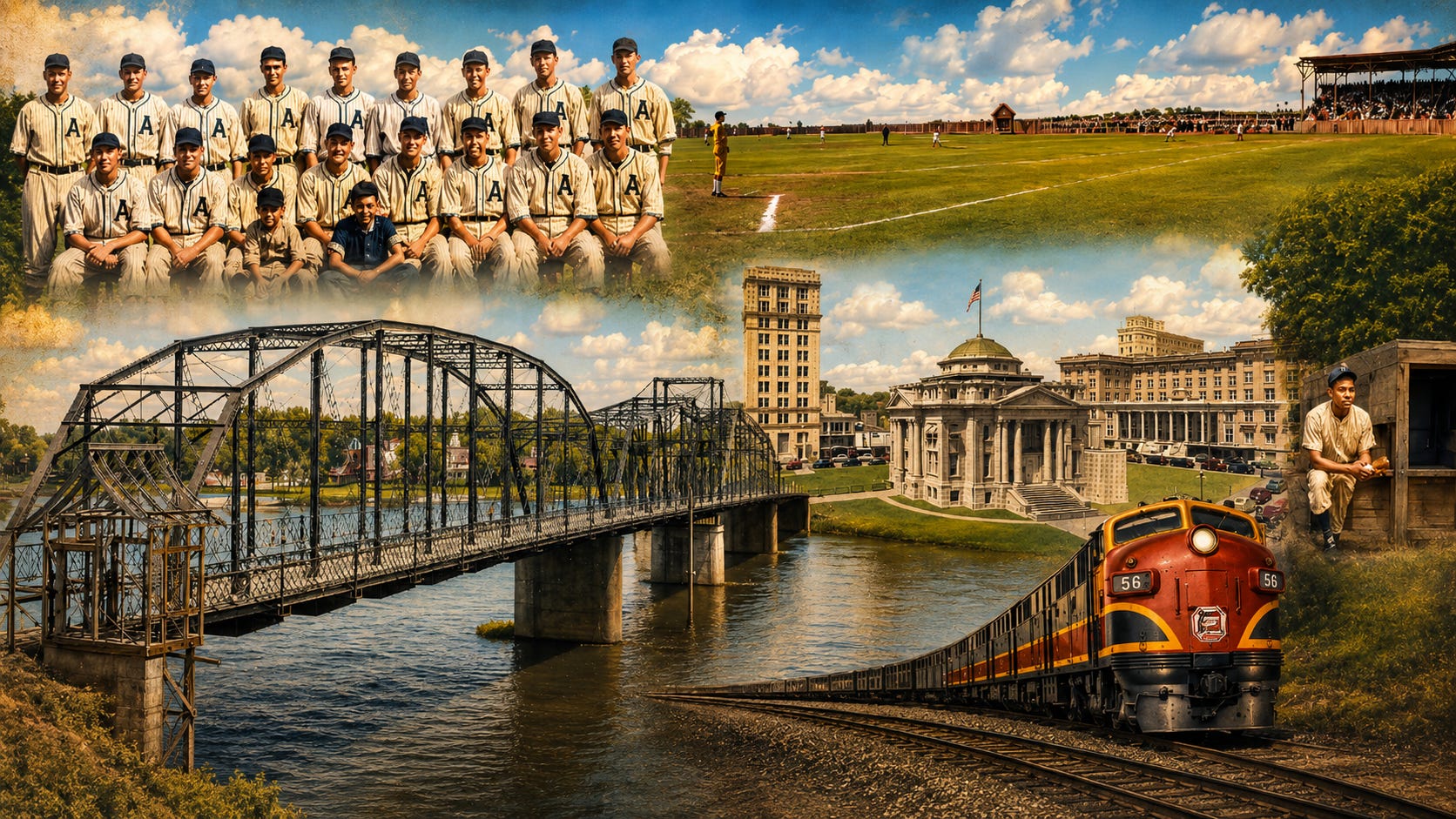
This is the second installment in a multi-part series on Bringhurst Field and the long, improbable history of organized and professional baseball in Alexandria, Louisiana.
The first installment began near the end of the story’s most haunting chapter, with Andy Strong’s final night at Bringhurst Field. But Bringhurst was never only the site of a single tragedy. It was also the home of the Alexandria Aces, the city’s most enduring professional baseball team and, eventually, the only franchise to play every regular season of the Evangeline League, from its founding in 1934 through its final summer in 1957.
This installment returns to the years before the Aces became an institution. It does not begin under the lights at Bringhurst. It begins on older ground: at Sportsman’s Park, at City Park Diamond, at Lincoln Park, and in the civic memory of a town that had already learned what baseball could promise, what it could cost, and what it could take away.

“Whoever wants to know the heart and mind of America had better learn baseball, the rules and realities of the game—and do it by watching first some high school or small-town teams.”
—Jacques Barzun, “America at Play,” The Atlantic, Feb. 1954
The full story of Alexandria’s emergence as a “baseball town,” its entry into the scrappy but electrifying Evangeline League,1 and its decades-long dance with minor league baseball2 hasn’t been forgotten so much as it has been misremembered. The local media has, for example, long repeated the claim that its historic ballpark, Bringhurst Field, was built in 1933. It was actually constructed in only three weeks, one year later, in 1934,3 right in time for the home opener of the Evangeline League’s inaugural season.4567
That may seem like a trivial inaccuracy, but it points to a larger, more significant problem: a form of civic amnesia that occurs when a community loses the institutions that once preserved and corrected its own memory. The facts were not hidden. For more than 100 years, Alexandria’s local newspaper, The Town Talk, extensively chronicled the rises, falls, and rebirths of the city’s professional baseball teams, and its 1.4 million-page digital archive is available online.
Retelling this story requires reconstructing a complicated past, and it forces an uncomfortable but unavoidable confrontation with the present. The Alexandria of 1934 was vastly different from the city of today, even though they are both unmistakably the same place.
Among the Evangeline League’s charter cities, Alexandria would become both the outlier and the anchor. It was there from the beginning, and it remained when every other original city disappeared, returned, reorganized, or gave way to some later version of the circuit.8 Eventually, the Alexandria franchise would become the only one to play every regular season of the Evangeline League, maintaining the same civic baseball identity while other cities changed names, affiliations, arrangements, and operators.
Location mattered. New Orleans had the port and the romance; Baton Rouge had the Capitol and the Tigers; Shreveport had oil money and swagger; Lafayette had the prairie Cajun pulse that would later define Acadiana. Alexandria had something quieter but no less consequential: the crossroads. Situated at the hinge of north Louisiana, Acadiana, the piney woods, and the old river parishes, Alexandria was not a single culture so much as a meeting place: Catholic, Protestant, Jewish, Black, white, rural, commercial, legal, medical, military, and mercantile. Central Louisiana in the fullest sense.

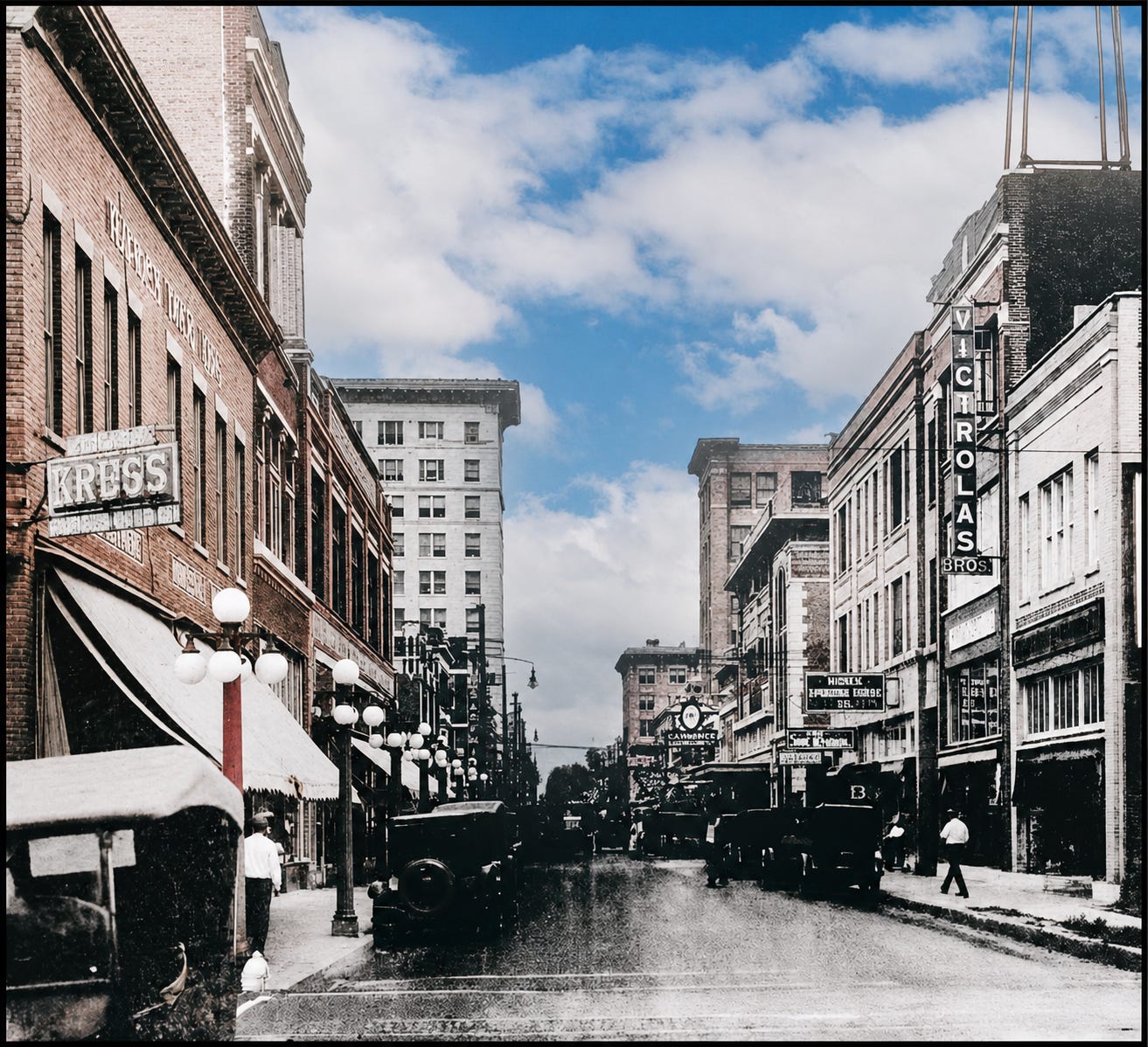
By 1934, Alexandria’s confidence had been built over nearly half a century of progress.910 Between 1890 and 1910, the city grew from a small riverside town of 2,861 people into a bona fide American city of 11,213,11 asserting itself as the commercial capital of central Louisiana. “Alexandria has more paved streets and sidewalks than any city of its size in the Union,” The Alexandria Weekly Town Talk boasted in 1907. “It was one of the first cities of the South to own its waterworks and electric light systems. It has a larger and better sewer system than any city of 12,000 inhabitants in the Union.”12
But despite its advantages and its appetite for baseball, Alexandria had reason to be cautious. All six of the Evangeline League’s charter cities had seen professional baseball before, and all six still dreamt of the magic that the game unlocked. Only Alexandria, however, had recently experienced the heartache and humiliation of losing its hometown team, and in 1934, that loss still stung.
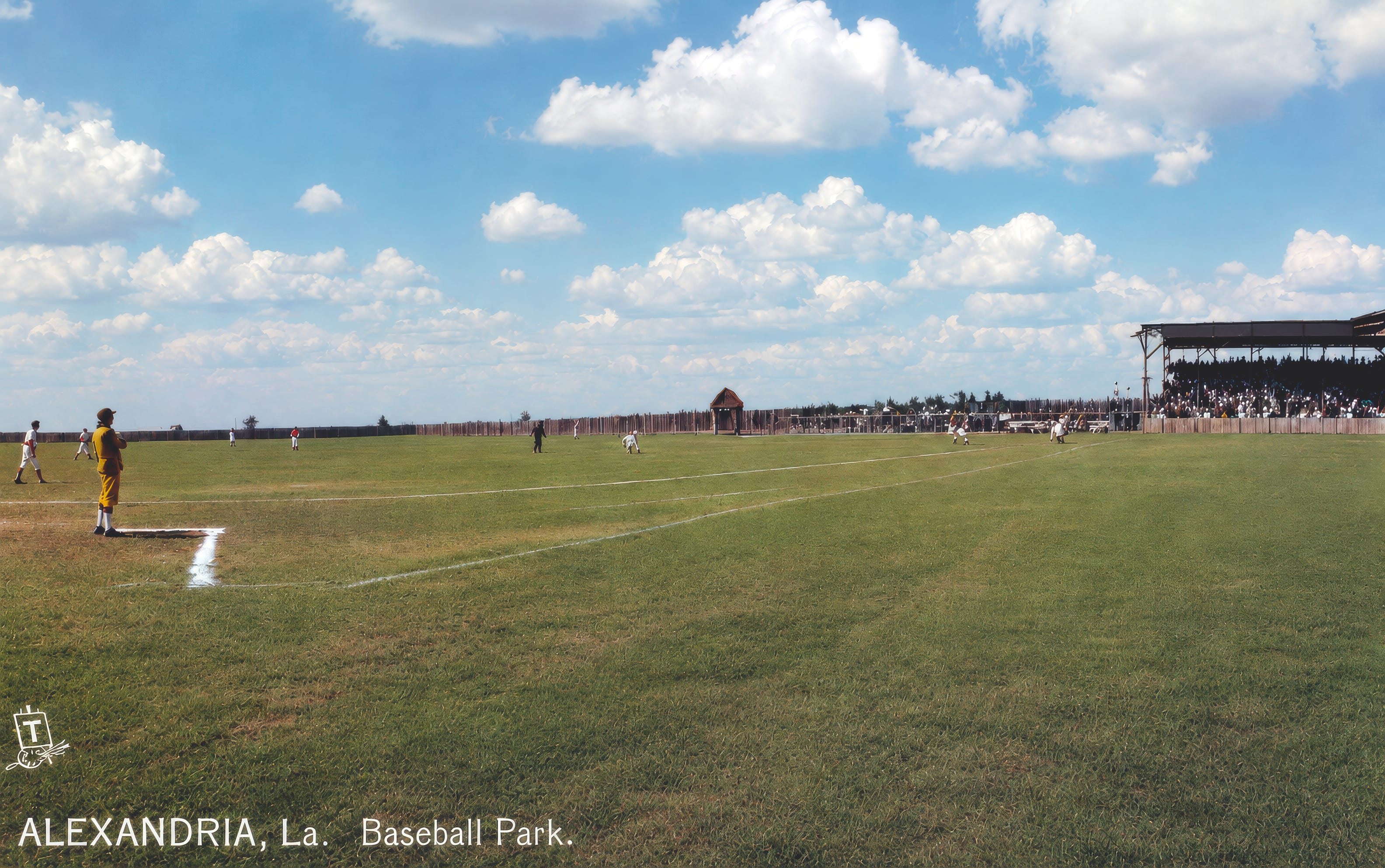
Alexandria’s first major purpose-built public ballpark, Sportsman’s Park, opened in 1907.13 It was located at the end of the city’s electric streetcar line, adjacent to the existing Electric Park skating rink and near the present-day intersection of Jackson Street and Texas Avenue. That same year, the White Sox of the Gulf Coast League became the city’s first professional baseball team. The league’s directors, The Town Talk reported, “were all pleased with Sportsman’s Park, and the verdict of all was that Alexandria would have one of the finest parks in the League.”14
Alexandria already knew what professional baseball could promise, and what it could cost. The city’s minor-league record was long enough to inspire nostalgia but uneven enough to justify caution: the Alexandria White Sox of the Gulf Coast League in 1907 and 1908;15 the Alexandria Hoo Hoos16 of the Arkansas State League in 1909;17 the Alexandria Tigers of the Louisiana State League in 1920;18 and, most recently and most memorably, the Alexandria Reds of the Cotton States League, who played from 1925 until their bitter collapse, mid-season, in 1930.19
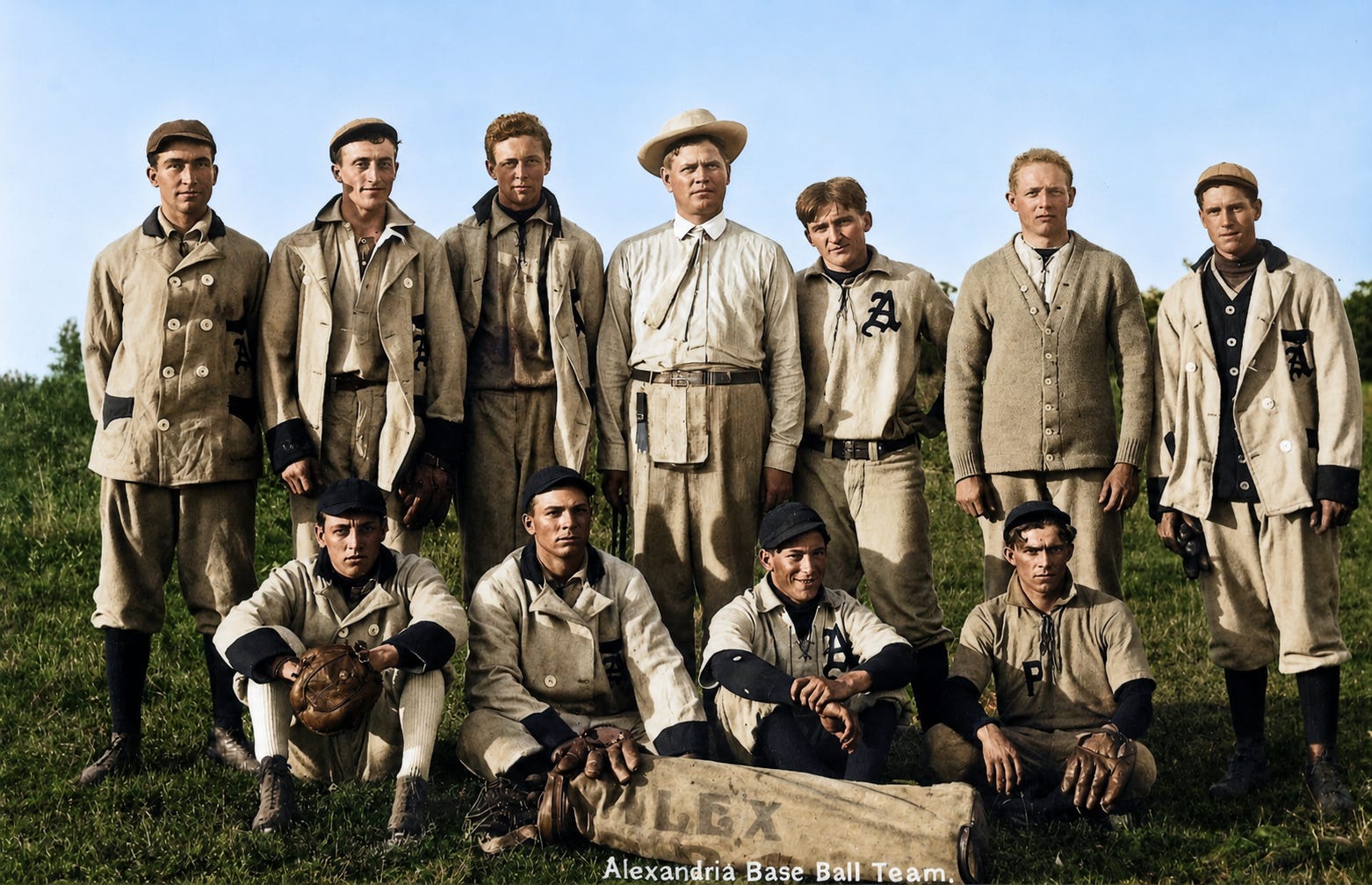
But this list, useful as it may be, needs one more sentence of correction: it is the lineage of Alexandria’s white professional clubs.
Black Alexandria had built a baseball world of its own long before the Evangeline League arrived. Michael D. Wynne, a local historian and writer, recently unearthed evidence of at least one documented Black club, the West Alexandria Lightfoots,20 that played competitively—and for cash—in June of 1906,21 one year before the White Sox entered the Gulf Coast League. To be sure, the Lightfoots did not belong to a professional league, and there are earlier reports of competitive club and amateur baseball teams, both Black and white, dating back to at least 1901. Regardless, given the structural and institutional barriers that existed for Black Alexandrians during the Jim Crow Era, the fact that a Black team was both recognized and named—an earlier Black team was simply referred to as “Alexandria’s Colored Club”—by the white establishment newspaper is significant. Alexandria’s story as a “baseball town” does not begin with the White Sox, the Hoo Hoos, the Tigers, or the Reds. It begins, at least in part, with the Black teams—the Lightfoots, the All-Stars,2223 the Pioneers, and the Lincoln Giants—whose games were segregated or simply erased from the official civic narrative.
The same is true of Alexandria’s baseball geography. While the city’s first organized white team, the White Sox, played at Sportsman’s Park, organized Black baseball first played at Alexandria’s “Negro Base Ball Grounds,” located on Casson Street and better known as Lincoln Park. The site and much of the surrounding neighborhood were later demolished and are now part of Interstate 49 and the Pineville Expressway Overpass.
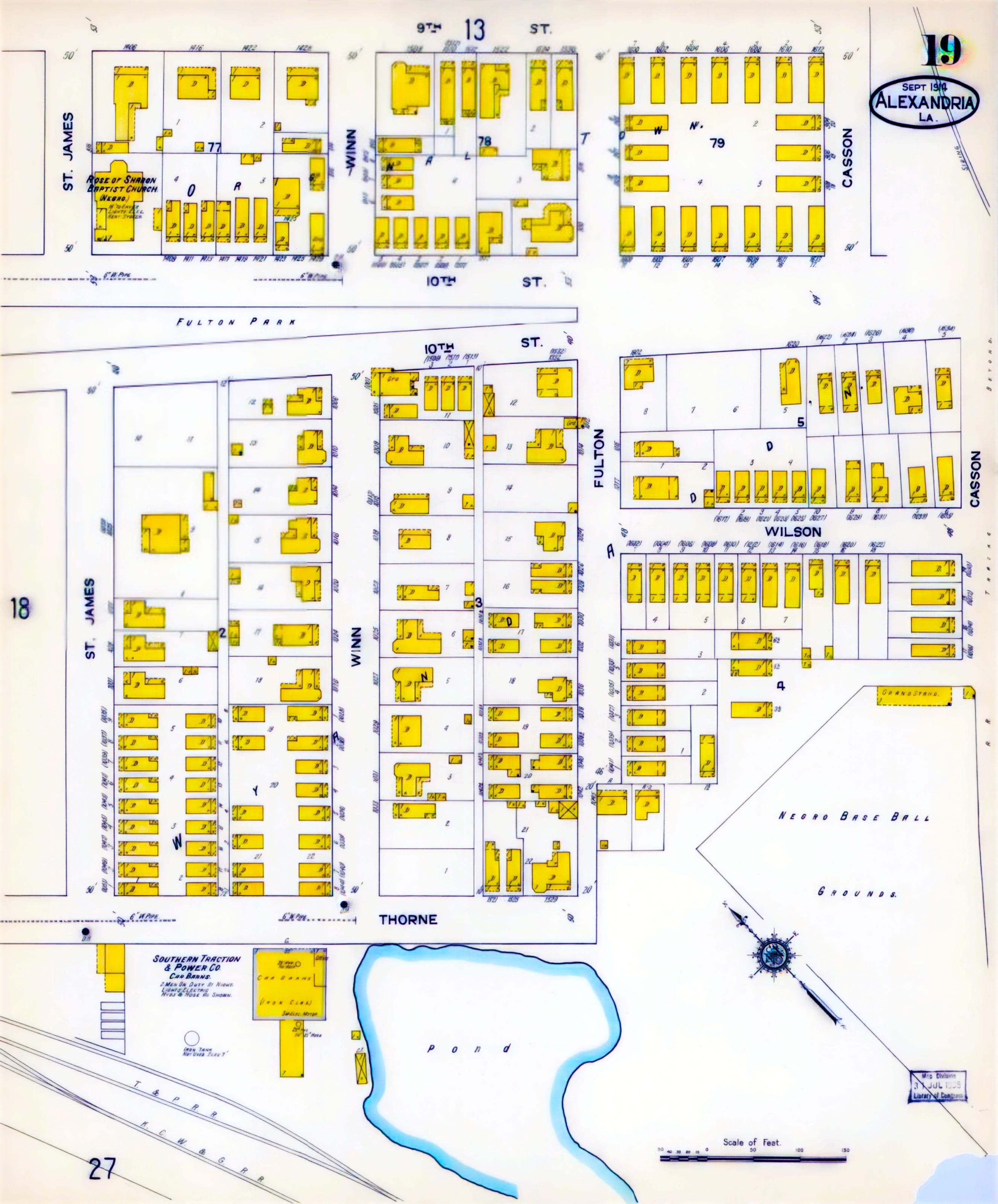
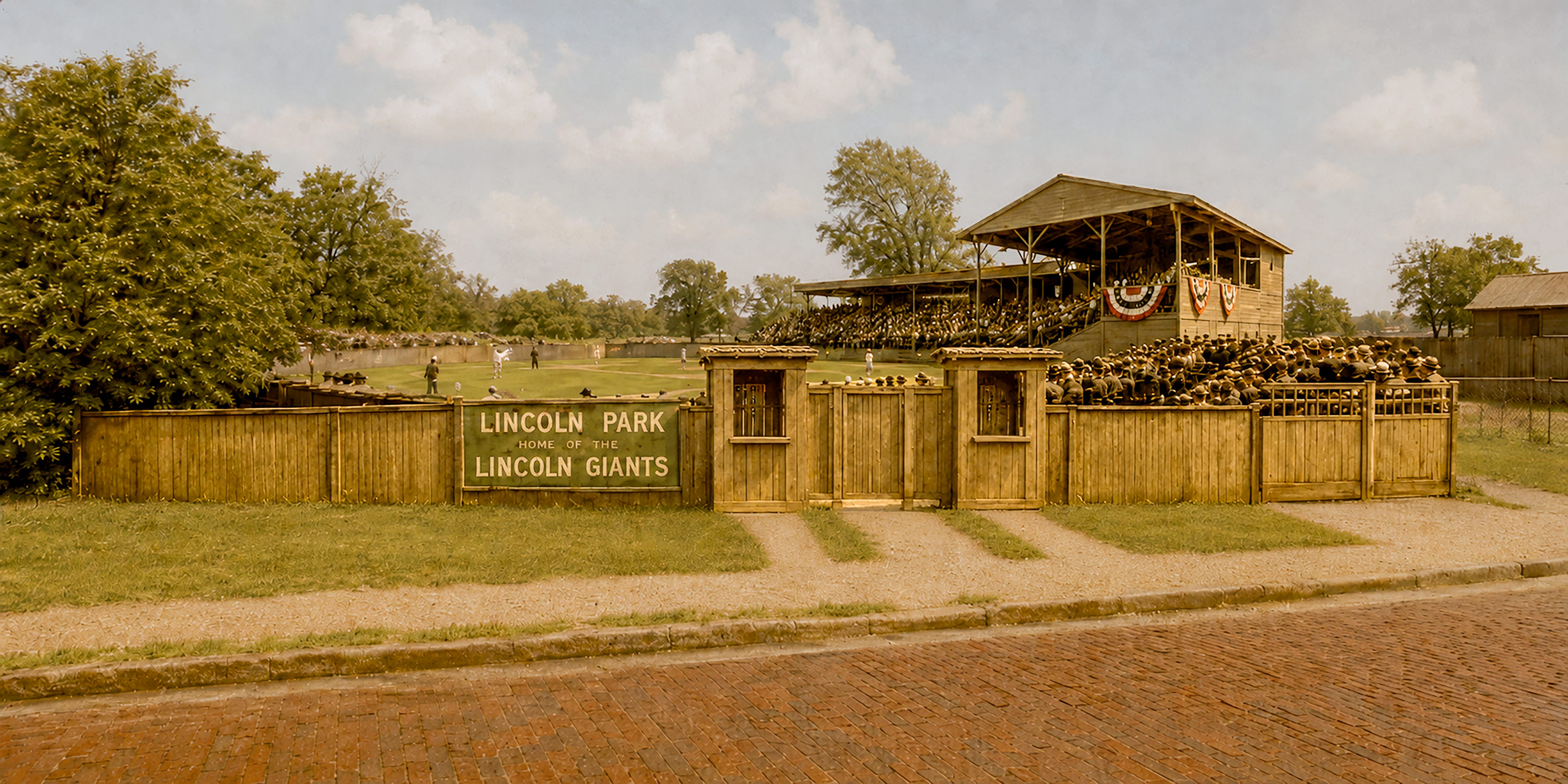
On July 1, 1932, The Town Talk announced the opening of a newly constructed “Negro baseball field” at Lee and Harris streets and, confusingly, also named Lincoln Park. The formal opening was scheduled for July 3 and 4, with the Alexandria Pioneers playing a strong semi-pro club from Lake Charles. The park had been built for approximately $900, with a 150-foot grandstand and seating for about 700 spectators. Special reservations were made for white spectators, because “scores” of white people had already been attending games there that season.24 Even in segregation, the Black game was not invisible. It was visible enough that white spectators came to watch, and visible enough that the white newspaper had to acknowledge the crowd.
The new Lincoln Park was a purpose-built ballpark, constructed on land owned by local attorney Ralph Thornton25 two years before Bringhurst Field, with officers, a grandstand, scheduled holiday openings, visiting opponents, and a team. The Pioneers’ opening series against Lake Charles placed Alexandria’s Black baseball scene inside the broader semi-pro network of Louisiana. The language was booster language. The pride was institutional. Black Alexandria was building more than a team. It was creating a baseball public.
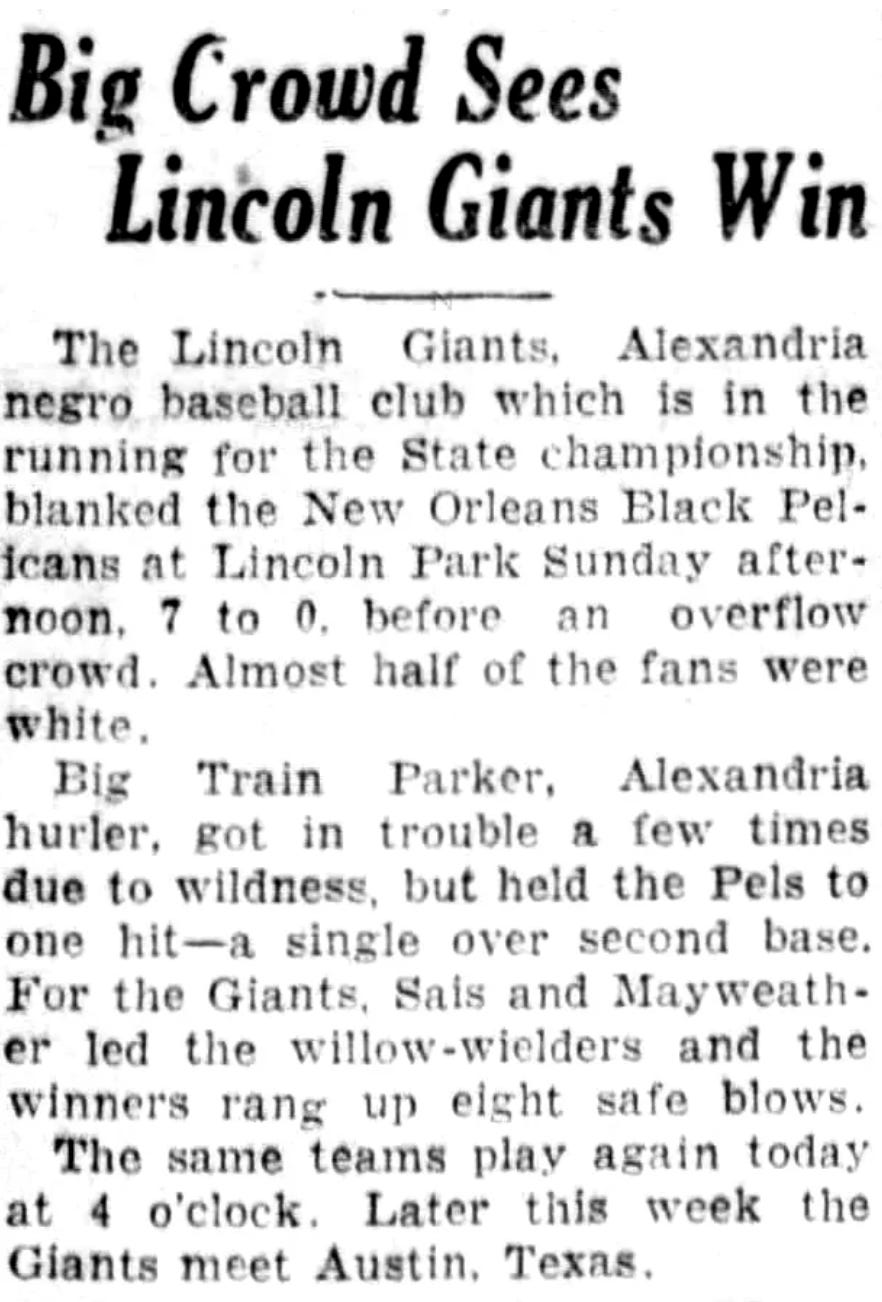
Within a month, the Alexandria Pioneers had been replaced by a larger and more ambitious arrangement when the owners of the Shreveport Giants struck a deal to relocate to Alexandria. On August 29, 1932, as the newly renamed Alexandria Lincoln Giants prepared to host two games against the Natchitoches Reds, The Town Talk not only promoted the games but also gave special attention to one of the hometown team’s pitchers: Tom “Big Train” Parker, described as a star Alexandria hurler who had already turned back three teams that season with only one hit each.26
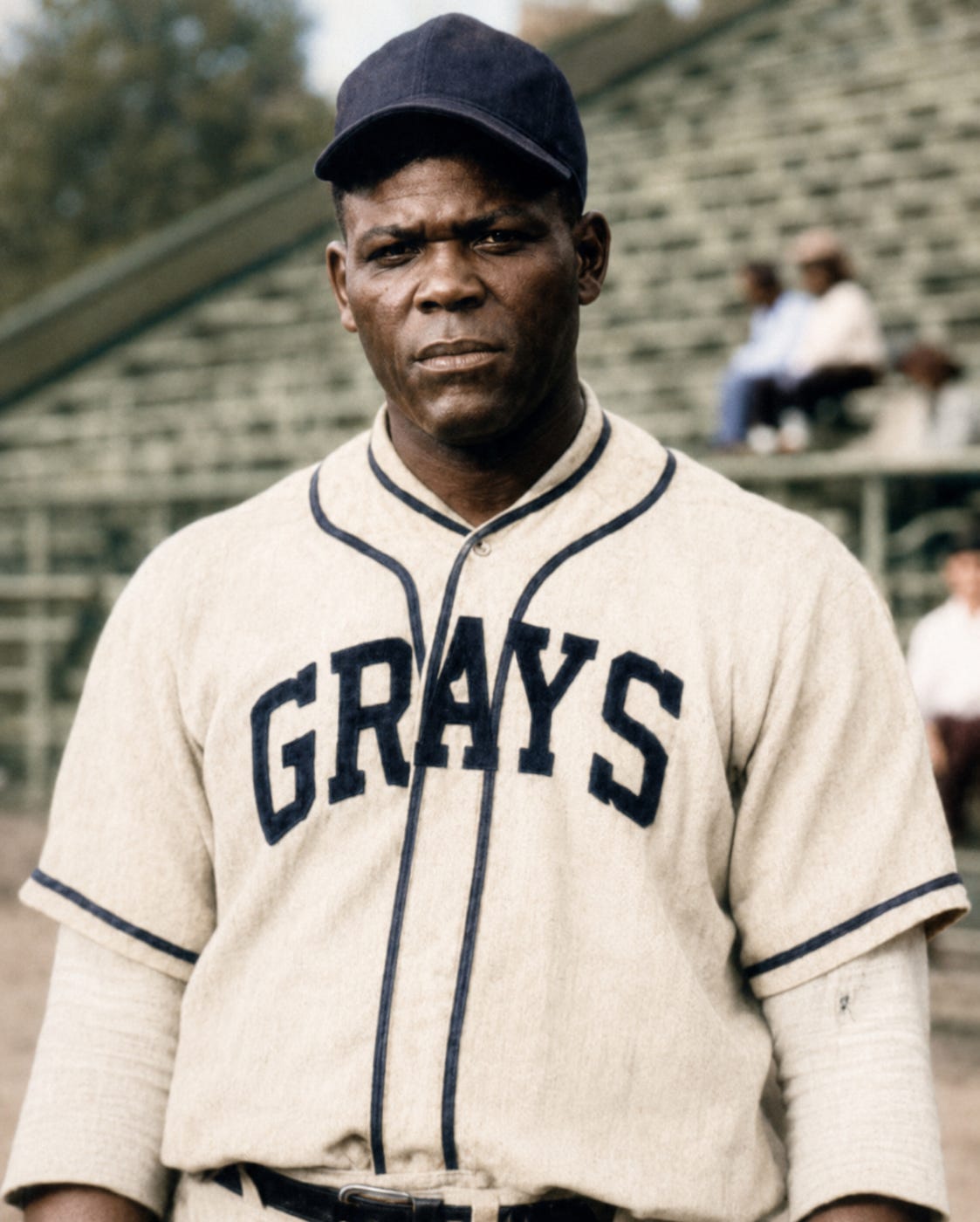
He more than deserved the special attention. Parker was an Alexandria native. After spending the previous season with the Indianapolis ABCs of the first National Negro League, he went on to build a long and notable career as a member of numerous Negro League clubs across the country, culminating in 1948, his final season, with a World Series championship as a starting pitcher for the Homestead (Pittsburgh) Grays. 1948, it turned out, would be the last-ever Negro League World Series. Although he was known primarily as a pitcher, Parker actually played more seasons as an outfielder.
The Town Talk’s reporting on Parker’s two seasons with the Alexandria Lincoln Giants appears to clarify a gap in Parker’s documented career.27 Tom Parker seemed to disappear after leaving Indianapolis in 1931, only to emerge in 1934 as a member of the New Orleans Crescent Stars. He wasn’t, as baseball historian James Riley claimed without any corroborating evidence, with the Monroe Monarchs.28 Parker, still a teenager at the end of his season in Indianapolis, decided to return home, and, fortuitously for him, he did so at the same time Black baseball had truly arrived.
Both Parker and the team were a sensation. On August 29, 1932, The Town Talk acknowledged something special was happening at Lincoln Park:29
In 1933, the Lincoln Giants of Alexandria were admitted into the (Black) Dixie League, a Black baseball circuit composed of teams from New Orleans, Shreveport, Little Rock, Memphis, Monroe, Jackson, and Algiers (New Orleans). R. D. Marcus and Glen Bradford were placed in charge of the local club. Lincoln Park was to be repaired, the grandstand covered, players signed, and exhibition games opened in March.30
The connection between the Alexandria Lincoln Giants and the broader Negro League-era baseball world places Central Louisiana inside the same segregated baseball ecosystem that, for generations, baseball writers treated as peripheral. But it was not peripheral. It was parallel.
None of that means every game at Lincoln Park belonged to the same category as formal Negro League competition. Local histories like Alexandria’s often blur formal league games, exhibitions, and semi-pro contests in the same ballparks and newspaper columns. But it does mean Alexandria’s Black baseball history belongs in the same paragraph as its white professional history, not in a footnote. The city had two baseball inheritances moving side by side: one better funded, more loudly promoted, and more easily remembered; the other segregated, under-documented, but just as rooted as white baseball and substantial enough to build its own field before Bringhurst existed.
That organization also complicates the birth story of Alexandria’s Evangeline League franchise. In June 1933, with Alexandria still without a white professional club, Lincoln Park became part of the conversation about bringing league baseball back to the city. When Baton Rouge and Jackson, two (white) Dixie League teams, arranged an exhibition at Lincoln Park, Josh Billings of Baton Rouge used the occasion to urge Alexandria fans to improve their ballpark.31 According to The Town Talk, Billings called Lincoln Park “a good beginning in the right direction,” suggesting that if the infield were skinned back, box seats and dugouts built, and the outfield fences extended and improved, the field “would do.”32
It is a striking moment: a Black ballpark, built by and for segregated Black baseball, was suddenly being evaluated as the possible foundation for Alexandria’s return to professional league baseball.
That was Jim Crow’s double logic at work. Segregation forced Black Alexandrians to build their own institutions, but once those institutions proved useful, white baseball men could imagine converting them into civic assets for the city at large—or, more precisely, for the white city that claimed the authority to speak for the whole. Lincoln Park was good enough to draw crowds, host traveling clubs, attract white spectators, and be discussed as a possible professional venue. Yet in the traditional story, it nearly disappears, replaced by Bringhurst Field as if Alexandria’s baseball geography began only when white professional baseball returned.
The Lincoln Park thread continued into 1934. As Alexandria maneuvered toward a place in what would become the Evangeline League, The Town Talk described prospective players, groundkeepers, umpires, ticket-sellers, rookies, and veterans swarming around Lincoln Park, as well as local men trying to bring baseball back.33 Before Alexandria’s new professional franchise had fully taken shape, Lincoln Park was one of the places where the city’s baseball future was being imagined.34 The park built for Black baseball stood, for a brief and revealing moment, at the edge of the white professional game’s return.
That history changes the frame. The Evangeline League arrived in a city that carried two baseball histories at once: one segregated, under-documented, and older than the civic story usually admits; the other better publicized, more commercially organized, and still raw from recent disappointment.
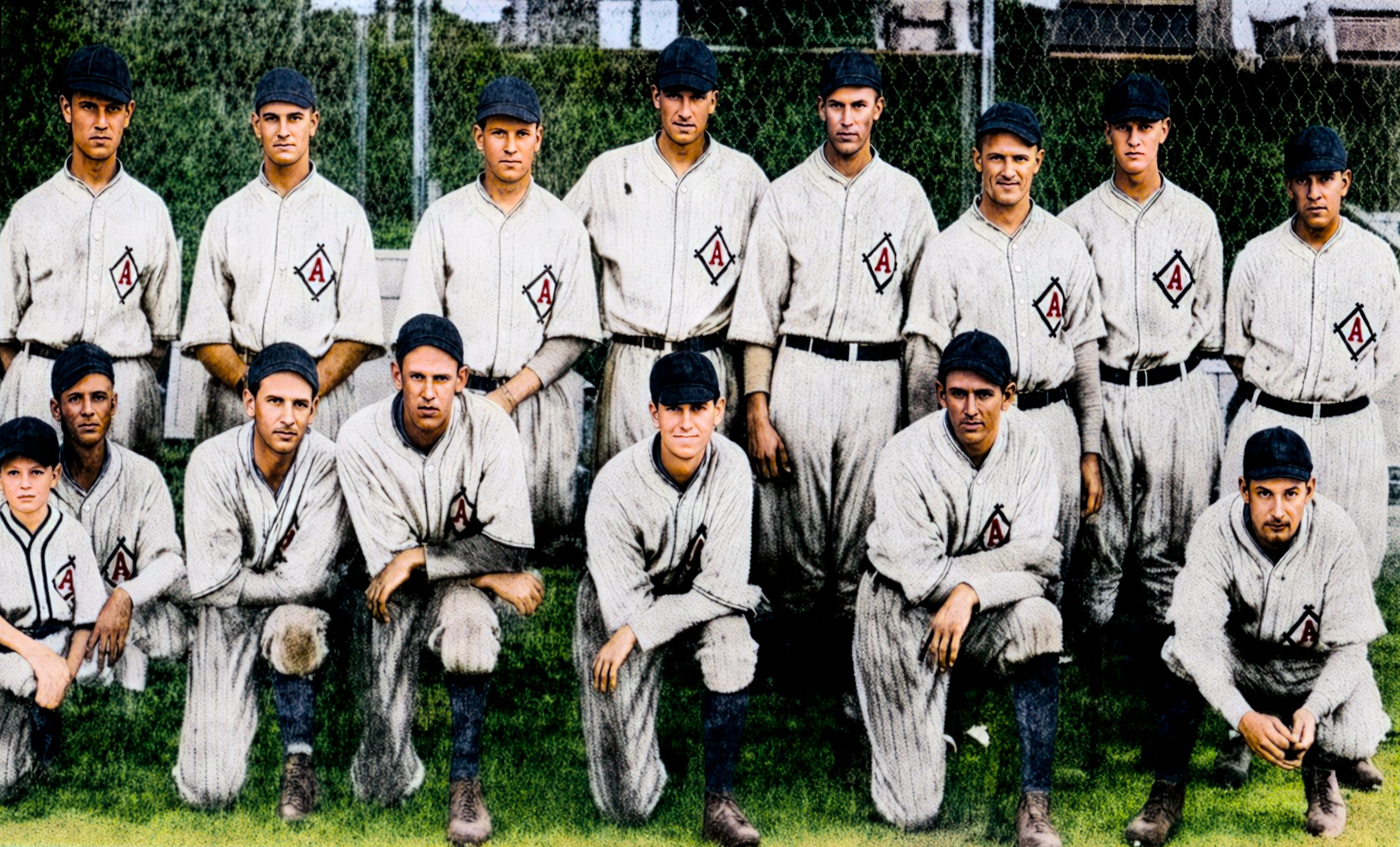
Among Alexandria’s four white professional predecessors, the Reds remained the most vivid cautionary tale. The wound had not scarred over. Former fans, merchants, boosters, and civic leaders still remembered the embarrassment of having rallied around a team that disappeared almost overnight. What made the loss sting even more was that the Reds had not been a failed experiment in any simple sense.
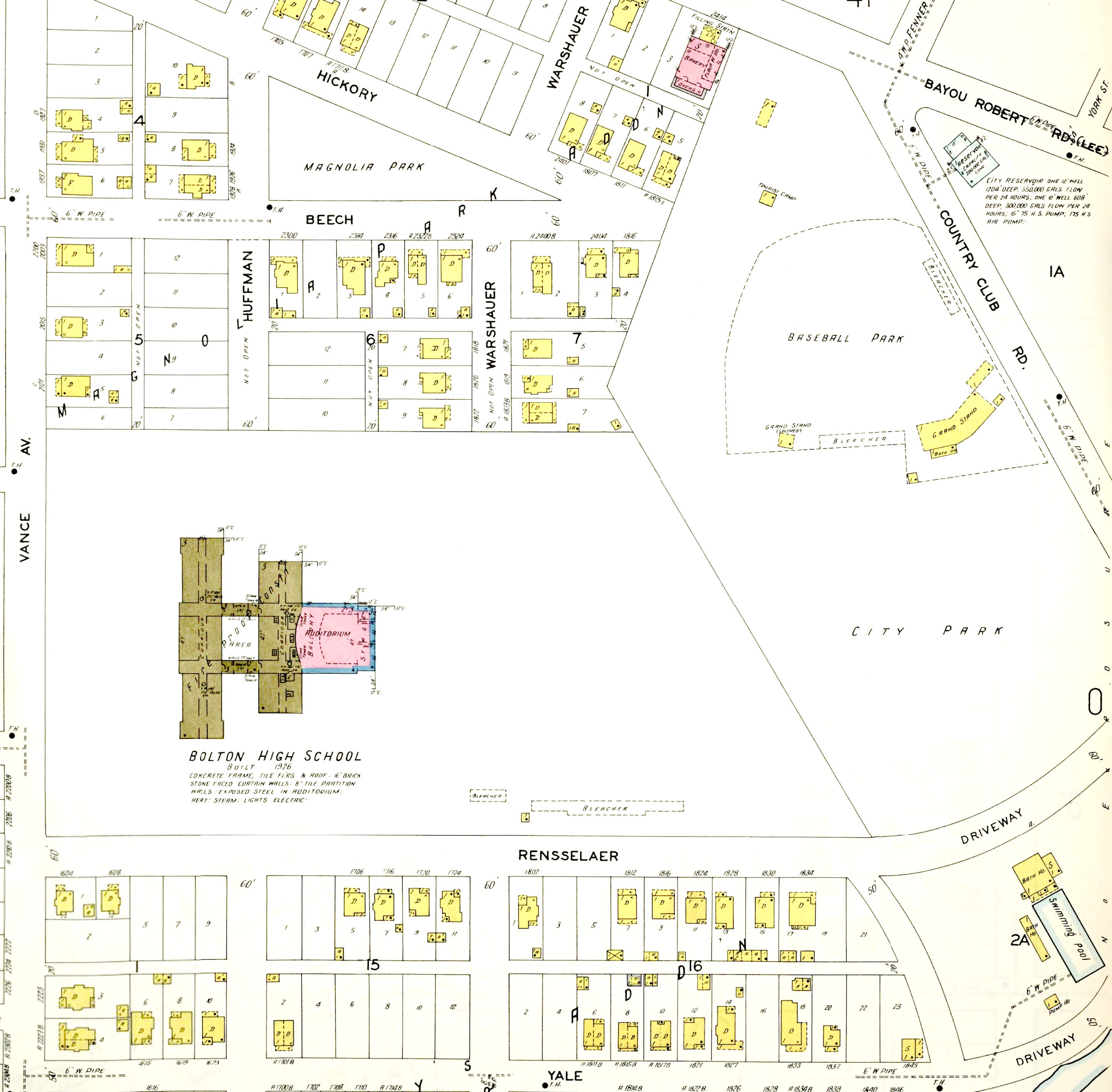
The Reds played at City Park Diamond, Alexandria’s public ballpark behind Bolton High School on Country Club Road, near what is now Masonic Drive and Lee Street. They had begun auspiciously enough. More than 4,000 fans crowded into the park on Sunday, April 19, 1925, to watch the club’s home debut against the Monroe Drillers, a 14-3 Alexandria victory that gave the Reds their third consecutive win.35
Attendance mattered in the Cotton States League almost as much as the standings, because gate receipts were the oxygen of Class D baseball. “If Alexandria doesn’t capture the attendance cup with yesterday’s crowd,” The Town Talk surmised the next day, “this city should at least feel proud of its showing as it has not had professional baseball in some time.” The paper could not resist the comparison: Alexandria’s crowd was nearly half as large as the one at New Orleans’ opener. “It proved beyond a doubt,” the paper declared, “that Alexandria is ready for baseball.”36
But even in that moment of triumph, the ceiling was already visible. Alexandria did not capture the 1925 attendance cup. The Reds would draw the league’s largest opening-day crowd the following year—an official attendance of 3,741—but the more than 4,000 who saw the 1925 home debut remained the club’s local high-water mark, later surpassed elsewhere by a crowd of more than 4,500 at Jackson, Mississippi.
After that, the promise began to fray. By July 1926, barely fifteen months after the Reds’ triumphant debut, the club was already asking Alexandria to save its professional baseball club from financial ruin. Reds boosters urged 2,000 fans to attend a benefit game and help wipe out a $1,888 deficit. The appeal was not subtle: if the deficit could be retired, Alexandria would remain in the league in 1927; if not, its future was uncertain. The numbers told the story. Weekday attendance, once estimated at around 610, had fallen to roughly 200. Sunday crowds, once near 900, had slipped closer to 600.37
By 1928, the question was being asked in print with almost accusatory bluntness: Did Alexandria even want baseball?38
The Town Talk reported that attendance that season had fallen so low that some recent gates barely covered the visiting club’s guarantee, leaving ordinary expenses unpaid. Crowds that had once numbered 500 or 600 had dwindled to 150 or 200. Players complained that City Park had become too quiet, that the home crowd waited for mistakes instead of lifting the team, and that the Reds needed not merely spectators but believers.
This was when the argument turned. The Reds were no longer simply a team trying to win games. They had become a referendum on Alexandria’s civic seriousness, a test of whether the city could sustain what it had once so loudly celebrated.
And then, the very next year, the Reds treated fans to a season more riveting and rewarding than they could have imagined.
The unlikely star of the 1929 club was a young right-handed pitcher named Lon Warneke. A gangly Arkansas farm boy known as “Dixie Dude” by his Alexandria teammates, Warneke had talked his way onto the team at the tail end of the 1928 season after being cut from the Cotton States club in Laurel, Mississippi.39 He had been a clumsy first baseman with little apparent hope of making it in the big leagues. But in Alexandria, he reinvented himself.
“I refused to quit just because they had let me go,” Warneke recalled later. In Alexandria, Warneke completed his reinvention as a pitcher.40 As part of the Reds’ starting rotation, he honed his craft and added a devastating curveball to his repertoire. He finished the year as the team’s co-MVP, with a 16-10 record and a $7,500 contract with the Chicago Cubs. Lon Warneke would become one of the National League’s best pitchers of the 1930s, an ace on two pennant-winning Cubs clubs, a five-time All-Star, and a 192-game major-league winner whose career totals were likely shortened by wartime service.
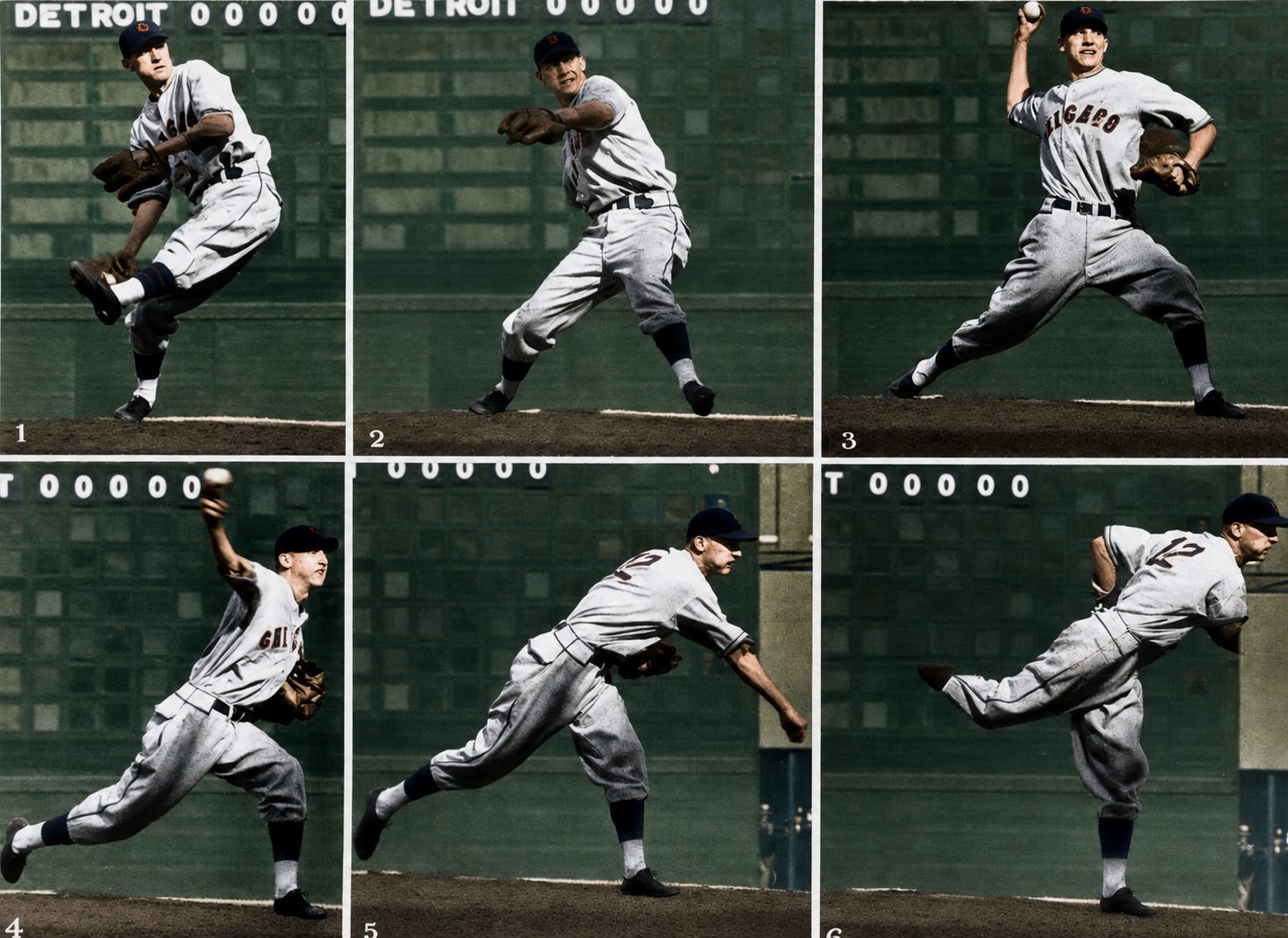
Today, Lon Warneke may be one of baseball’s most accomplished forgotten figures, but for much of the twentieth century, he remained cherished in Alexandria, appreciated not simply for anything he accomplished in a Reds uniform but as an emblem of the “future great” that Alexandria had helped cultivate.
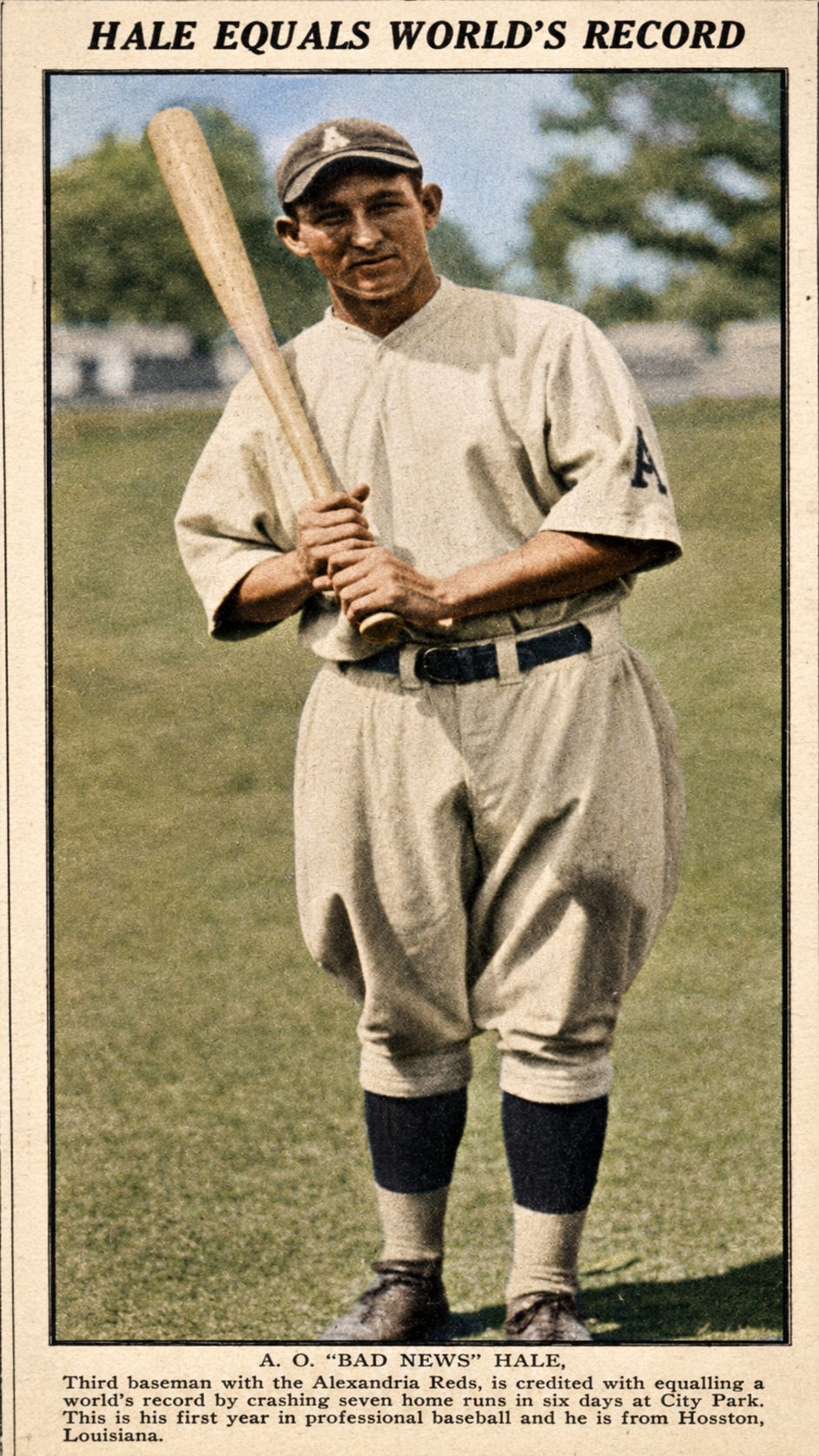
In addition to Warneke, the 1929 squad also featured Odell Hale, a preternaturally gifted rookie infielder and a deceptively powerful slugger who would spend the bulk of his major-league career shuffling between second and third base with the Cleveland Indians. During his season with the Reds, Hale’s sensational clutch hitting, offensive productivity, league-leading 116 runs scored, and towering home runs made him an immediate fan favorite in Alexandria and earned him one of baseball’s most spectacular nicknames. In central Louisiana, Arvel Odell Hale was simply known as “Bad News.”41
In 1929, the Reds finished first in the Cotton States League and helped nurture the careers of at least seven future major leaguers, including “Dixie Dude” Warneke and “Bad News” Hale. They proved that minor-league baseball could generate civic pride in abundance and that Alexandria could matter to the larger baseball world. But they also proved that pride, talent, and even a first-place finish were not enough when crowds thinned, deficits mounted, and outside baseball interests decided a town was no longer worth the trouble.
The team’s successes only sharpened the bitterness of what followed.
The final break came in 1930, after Ollie Lee Biedenharn of the Shreveport Baseball Association had taken control of the franchise. Alexandria’s leaders later argued that supporters had raised about $5,000 before the season after Biedenharn allegedly told them the club would remain for the full schedule if local investors produced that amount.
Instead, after five-and-a-half seasons in the Class D Cotton States League, “saddened fans attended the funeral of the Alexandria Reds,” their final game as a professional baseball team, The Town Talk reported. At one hour and twenty minutes, it was said to have been “the fastest nine-inning game in the city’s professional baseball history.” Ultimately, the Reds fell to the Pine Bluff Judges, 8-7.42
The Alexandria Reds, however, would not go gently.
The local complaint wasn’t that the Reds had failed at the gate. It was that Alexandria had been used: its fans had bought in, its merchants had contributed, its players had been developed and sold, and then the city had been dropped when the arrangement no longer suited outside interests. Alexandria asked Judge Kenesaw Mountain Landis, commissioner of Major League Baseball, and Mike Sexton, president of the National Association of Professional Baseball Leagues, to intervene and force the Cotton States League to readmit the Reds in 1931, but the appeal went nowhere.43 Biedenharn, for his part, categorically denied Alexandria’s version of the story.
In 1931, the Cotton States League continued without Alexandria, narrowing to six clubs in Jackson, Vicksburg, Pine Bluff, Baton Rouge, Monroe, and El Dorado. By 1932, even that reduced circuit could not hold. Franchises lurched from Port Arthur to DeQuincy to Opelousas, from Vicksburg to Jackson, and then the league itself folded on July 13. By 1933, the old Class D Cotton States League had effectively been supplanted by a broader Class C Dixie League, a more expensive and less hospitable arrangement that included Baton Rouge and Shreveport but still left Alexandria outside the map.
The city wanted professional baseball, but the league it hoped to rejoin was no longer there in any meaningful sense.
What survived in Alexandria from 1931 through 1933 was not a franchise in any formal sense. The professional Reds were gone, and with them the payrolls, league obligations, and fragile illusion that civic pride alone could keep a Class D club solvent.
But Paul A. Gilham, Sr., understood that the habit of baseball had not disappeared with the franchise. He was not just another fan with a scorecard. Gilham, an Atlanta native who built a prosperous career as the head of Alexandria Coca-Cola, was a respected businessman and a politically ambitious civic leader. In 1929, he had challenged Mayor Victor V. Lamkin,44 a local bank executive whom Huey Long had appointed following the death of Mayor John F. Foisy. Gilham lost despite the local paper’s endorsement, finishing fourth in the Democratic primary,45 but the campaign marked him as one of those familiar Alexandria figures who believed public life belonged not only to officeholders but also to merchants, boosters, clubmen, and organizers.
Baseball gave Gilham a different arena for that same instinct. The town still had players, fans, a ballpark, newspaper space, merchants willing to talk, and the stubborn conviction that Alexandria was too much of a baseball town to sit out the summer in silence.
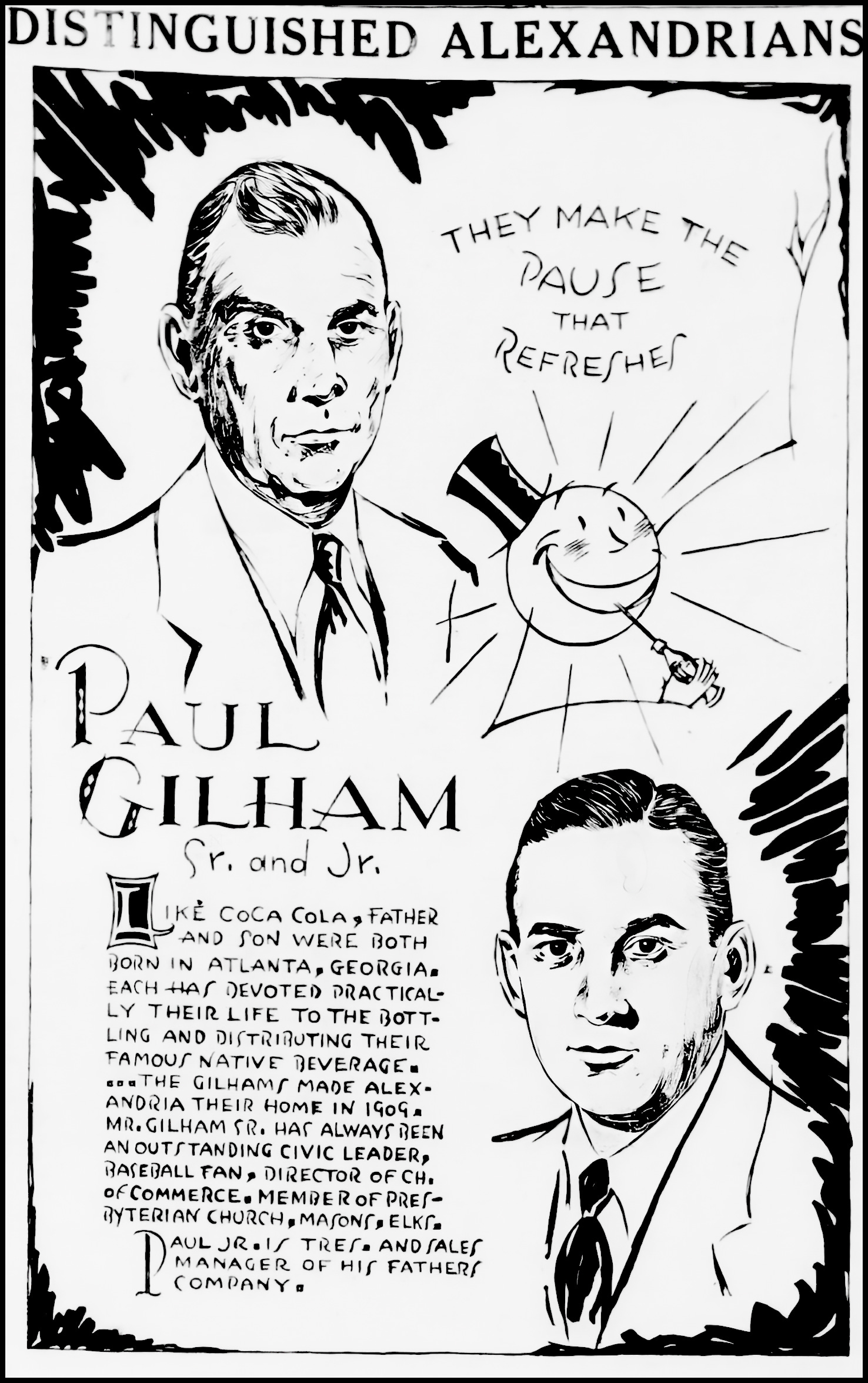
So in 1931, Gilham helped reconstitute the Reds in humbler form. They were no longer Alexandria’s emissaries to organized baseball, no longer a professional club chasing standings in the Cotton States League. They became instead a local amateur and semi-professional team, part of a scrappy Central Louisiana Baseball League built from courthouse towns, lumber settlements, hospital clubs, and mill communities—places like Colfax, Urania, Rochelle, Glenmora, Hodge, and Winnfield.46
This was baseball stripped of its more expensive pretensions but not of its importance. It had schedules, officers, rules, standings, opening ceremonies, disputes over eligibility, arguments about former professionals, and enough seriousness to make the sports page treat it as more than a pastime.
Gilham’s achievement was more than administrative. He kept the Reds’ name in circulation when it might easily have become a synonym for embarrassment. Under his hand, the name became something more forgiving and more durable: not the broken promise of the old professional club, but the sign of a community unwilling to give up the game.47
The amateur Reds represented a kind of civic salvage operation. They allowed Alexandria to continue imagining itself through baseball without asking the city to finance another dream it could not yet afford. They also gave local players a stage, local fans a team, and local boosters a reason to keep talking in the language of innings, schedules, rivalries, and summer crowds.
That mattered because Alexandria’s baseball problem was never only athletic. It was civic and economic. The old professional Reds had exposed the danger of confusing enthusiasm with solvency. Gilham’s Central Louisiana League offered a smaller, safer bargain: keep the name, keep the games, keep the summer ritual, but lower the stakes.
In that sense, the amateur Reds were both a consolation and a rehearsal. They preserved the appetite for professional baseball while teaching the town to be more careful about the terms on which it would return.
There was also a lesson embedded in that revival. The Central Louisiana League proved that baseball could still organize Alexandria’s civic imagination, but it also revealed the limits of nostalgia. The amateur Reds could preserve the habit, but they could not restore the status. They could keep the game alive, but they could not make Alexandria whole again as a professional baseball city.
By 1933, Alexandria had not stopped being a baseball town. It had become a more complicated one. Black Alexandrians had built their own baseball institutions under segregation, including a purpose-built ballpark before Bringhurst existed. White Alexandrians had watched a professional club make them proud, develop future major leaguers, finish first, and then vanish under the control of outside baseball interests. Paul Gilham had kept the old Reds name alive, but only in a smaller, safer form.
The city did not need to be taught to love baseball. It needed to be convinced that professional baseball could return without betraying it again.
That was the Alexandria J. Walter Morris would soon try to recruit. Not an empty market. Not a naïve town. Not a place waiting for baseball to arrive for the first time.
A baseball town on the brink.
“Evangeline Baseball League Collection.” Nicholls State University Archives and Special Collections, MS-00010, Nicholls State University, accessed 18 June 2026.
“Alexandria Aces Franchise History, 1934–2009.” StatsCrew.com, Stats Crew, accessed 18 June 2026.
“New Baseball Park Will Be Built at City Park.” The Alexandria Daily Town Talk, 20 Mar. 1934, p. 7.
“Baseball Season to Open Tomorrow.” The Alexandria Daily Town Talk, 11 Apr. 1934, p. 1.
“Alexandria ‘Aces’ Vs. Opelousas ‘Indians’” [advertisement]. The Alexandria Daily Town Talk, 11 Apr. 1934, p. 10.
“Big Parade Here Marks Opening of Baseball Season.” The Alexandria Daily Town Talk, 12 Apr. 1934, p. 1.
“Aces Face Lake Charles at New Park Here Saturday.” The Alexandria Daily Town Talk, 13 Apr. 1934, p. 12.
“Evangeline Baseball League Collection.” Nicholls State University Archives and Special Collections, MS-00010.
“Historical Data on Alexandria and Rapides Parish.” The Alexandria Daily Town Talk, 17 Mar. 1933, p. 33.
“Daily Town Talk Observes 50th Anniversary Today.” The Alexandria Daily Town Talk, 17 Mar. 1933, p. 17.
United States Bureau of the Census. Thirteenth Census of the United States Taken in the Year 1910: Statistics for Louisiana. Government Printing Office, 1913.
“The New Rapides Parish Court House.” The Alexandria Weekly Town Talk, 13 Apr. 1907, p. 9.
“Miss Blessing Suggests the Name and Sportsman’s Park Adopted as the Name of the New Base Ball Park.” The Alexandria Daily Town Talk, 26 Feb. 1907, p. 5.
“Board of Directors of the Gulf Coast League Met in Alexandria March 3rd and Transacted Much Important Business.” The Alexandria Daily Town Talk, 4 Mar. 1907, p. 4.
“Alexandria White Sox Franchise History.” StatsCrew.com, Stats Crew, accessed 18 June 2026.
“Founded in 1892, the Concatenated Order of Hoo-Hoo is a fraternal organization of lumbermen and those in trades related to the lumber industry. Hoo-Hoo is the oldest industrial fraternal organization in the United States. At the height of the organization’s popularity, membership totaled more than 13,000.”
Bridges, Rachel. “Concatenated Order of Hoo-Hoo.” Encyclopedia of Arkansas, 29 Jan. 2024.
“Alexandria Hoo Hoos Franchise History.” StatsCrew.com, Stats Crew, accessed 18 June 2026.
“Alexandria Tigers Franchise History.” StatsCrew.com, Stats Crew, accessed 18 June 2026.
“Alexandria Reds Franchise History.” StatsCrew.com, Stats Crew, accessed 18 June 2026.
“Baseball To-Morrow at Lincoln Park.” The Alexandria Daily Town Talk, 30 June 1906, p. 4.
Wynne, Michael. “The Negro Leagues of Alexandria.” 318Central, 26 Feb. 2026, www.318central.com/thenegroleaguesofalexandria
“Louisiana Railway & Navigation Co. Grand Popular Rate and Labor Day Excursion” [advertisement]. The Alexandria Daily Town Talk, 30 Aug. 1923, p. 9.
“Alexandria All-Stars Lose in Fort Worth.” The Alexandria Daily Town Talk, 28 June 1926, p. 7.
“Lincoln Park, New Negro Baseball Field, to Open.” The Alexandria Daily Town Talk, 1 July 1932, p. 12.
“Negotiations for City to Enter League Opened.” The Alexandria Daily Town Talk, 13 Feb. 1934, p. 7.
“Big Crowd Sees Lincoln Giants Win.” The Alexandria Daily Town Talk, 29 Aug. 1932, p. 7.
Johnson, Bill. “Tom Parker.” SABR.org, Society for American Baseball Research BioProject, accessed 18 June 2026.
Riley, James A. The Biographical Encyclopedia of the Negro Baseball Leagues. Carroll & Graf, 1994.
“Big Crowd Sees Lincoln Giants Win.” The Alexandria Daily Town Talk, 29 Aug. 1932, p. 7.
“Alexandria Club in Negro League.” The Alexandria Daily Town Talk, 1 Feb. 1933, p. 7
“Billings Coming To Arrange For Game Here June 13.” The Alexandria Daily Town Talk, 6 June 1933, p. 7.
“Talking It Over.” The Alexandria Daily Town Talk, 15 June 1933, p. 7.
“Negotiations for City to Enter League Opened.” The Alexandria Daily Town Talk, 13 Feb. 1934, p. 7.
“Baseball Training Camp Notes.” The Alexandria Daily Town Talk, 20 Mar. 1934, p. 7.
“Over 4,000 Fans See Reds Win, 14-3.” The Alexandria Daily Town Talk, 20 Apr. 1925, pp. 1, 6.
Ibid.
“Reds Boosters Urge 2,000 Fans to Help.” The Alexandria Daily Town Talk, 28 July 1926, p. 7.
“Doubleheader Tomorrow—Stengle Wins Wrestling Match.” The Alexandria Daily Town Talk, 12 June 1928, p. 8.
“Lon Warneke Minor League Baseball Statistics.” StatsCrew.com.
Duren, Don. “Lon Warneke.” SABR BioProject, Society for American Baseball Research.
Nowlin, Bill. “Odell Hale.” SABR BioProject, Society for American Baseball Research.
“Reds Play Last Game in Alexandria, Depart.” The Alexandria Daily Town Talk, 18 June 1930, p. 8.
“Alexandria Takes Baseball Case to Judge K. M. Landis.” The Alexandria Daily Town Talk, 18 June 1930, p. 1.
“Paul A. Gilham Announces Will Run for Mayor.” The Alexandria Daily Town Talk, 23 Jan. 1929, p. 12.
“Lamkin and Bowdon To Be In Runoff.” The Alexandria Daily Town Talk, 3 Mar. 1929, p. 1.
“League Organized—Colfax Plays Here Tomorrow.” The Alexandria Daily Town Talk, 16 May 1931, p. 7.
“P. A. Gilham, Sr., Dies Suddenly.” The Alexandria Daily Town Talk, Apr. 15, 1937, p. 1.